
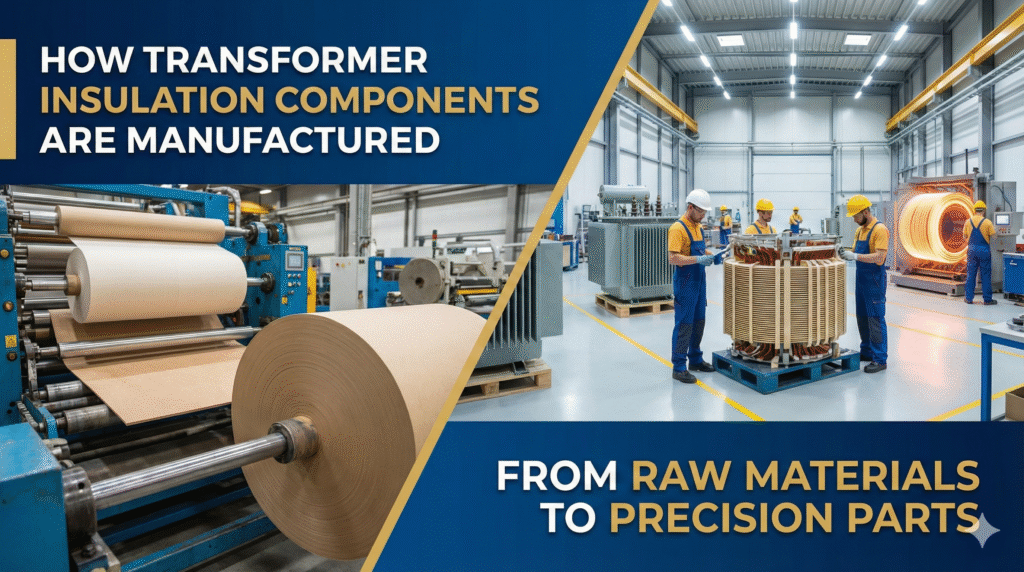
Transformer reliability does not depend only on copper windings or silicon steel cores. In real-world power systems, transformer insulation components decide how long a transformer will survive electrical stress, heat, moisture, and short-circuit forces.
From small Distribution Transformers Parts used in towns and villages to heavy Power Transformer Parts installed in substations, insulation components are carefully engineered, processed, and manufactured with strict quality control.
What Are Transformer Insulation Components?
Transformer insulation components are non-conductive parts placed inside a transformer to:
1. Separate live electrical parts
2. Maintain safe electrical clearances
3. Support windings mechanically
4. Control oil flow and cooling
5. Protect against short-circuit forces
These components are an essential part of Transformer insulation systems and are found across all Parts of a Transformer.
Specialized manufacturers such as KE Core Electric known globally as Transformer Insulation Parts Specialists, focus exclusively on producing high-precision insulation parts that meet IEC, IS, and IEEE standards.
Why Manufacturing Quality Matters in Transformer Insulation
Insulation components are life-limiting parts of a transformer. Once solid insulation ages or fails, it cannot be repaired easily.
Poor manufacturing can lead to:
1. Partial discharge
2. Winding movement
3. Overheating
4. Dielectric breakdown
5. Sudden transformer failure
That is why professional manufacturers of Transformer Components invest heavily in:
1. Material selection
2. Controlled processing
3. Precision machining
4. Moisture control
5. Final inspection
Main Materials Used in Transformer Insulation Manufacturing
Before understanding the process, it is important to know the materials.
- Pre-compress pressboard
Pre-compress pressboard is a high-density cellulose-based insulation material specially made for oil-immersed transformers.
Key properties:
1. High dielectric strength
2. Excellent oil absorption
3. Strong mechanical rigidity
4. Good thermal stability
Used for:
1. Spacers
2. Barriers
3. End rings
4. Oil ducts
5. Packing blocks - Densified laminated wood
Densified laminated wood is produced by compressing hardwood veneers under heat and pressure using insulating resins.
Key properties:
1. Very high mechanical strength
2. Low dielectric loss
3. Excellent machining accuracy
4. Long service life in oil
Used for:
1. Clamping rings
2. Support blocks
3. Lead supports
4. Core insulation structures
Insulation papers and composites
1. Kraft paper
2. Crepe paper
3. Epoxy resin composites
These are used for conductor wrapping, bushings, and special Transformer Parts.
Step-by-Step Manufacturing Process of Transformer Insulation Components
Below is the real industrial process followed by professional insulation manufacturers.
Step 1 – Raw Material Selection and Inspection
Manufacturing starts with careful selection of raw materials.
For pressboard:
1. High-purity cellulose pulp
2. Controlled fiber length
3. Low ash content
For laminated wood:
1. Selected hardwood veneers
2. Uniform grain structure
3. Free from knots and cracks
Inspection checks include:
1. Density
2. Moisture content
3. Dielectric strength
4. Mechanical strength
Only approved materials move to the next stage. Reputed companies like KE Core Electric maintain strict incoming quality standards to ensure reliability of Transformer Parts Stock.
Step 2 – Sheet Formation and Pre-Compression
For Pre-compress pressboard
1. Cellulose pulp is processed into thick sheets
2. Sheets are dried under controlled conditions
3. High-pressure compression is applied
4. Density is increased to required specification
This process improves:
1. Mechanical rigidity
2. Dimensional stability
3. Electrical insulation performance
For Densified laminated wood
1.Thin wood veneers are stacked
2.Insulating resin is applied
3.Hot pressing is done under high pressure
4.Laminated blocks are cured
This creates densified laminated wood suitable for heavy-duty Power Transformer Parts.
Step 3 – Controlled Drying (Very Critical Stage)
Moisture is the biggest enemy of transformer insulation.
After pressing, materials are dried in:
1. Hot air ovens
2. Vacuum drying chambers
Target moisture content:
Usually below 6% (often even lower for power transformers)
Expert tip:
If insulation absorbs moisture during manufacturing, it will reduce dielectric strength permanently.
Step 4 – Precision Cutting and Machining
Once dried, insulation blocks and sheets are machined into required shapes.
Machining operations include:
1. CNC cutting
2. Milling
3. Slotting
4. Drilling
5. Edge finishing
Precision is extremely important because:
1. Even 1 mm error can disturb winding geometry
2. Sharp edges can cause partial discharge
Specialized manufacturers like Transformer Insulation Parts Specialists use dedicated machines to maintain tolerance for Transformer Components.
Step 5 – Component Forming and Assembly
Some insulation parts require forming into complex shapes.
Examples:
1. Circular end rings
2. Oil duct spacers
3. Inter-winding barriers
Processes used:
1. Heat forming
2. Mechanical pressing
3.Template-based shaping
These components are designed based on transformer drawings and voltage class.
Step 6 – Final Drying and Conditioning
After machining, insulation parts are dried again to remove:
1. Absorbed moisture
2. Ambient humidity
Final drying ensures compatibility with transformer oil and long service life.
Step 7 – Quality Control and Testing
Quality control is mandatory before dispatch.
Common tests include:
1. Density measurement
2. Moisture content test
3. Dimensional accuracy check
4. Visual inspection
5. Dielectric strength verification
Manufacturers supplying Distribution Transformers Parts and Power Transformer Parts must meet IS and IEC standards.
Manufacturing Differences – Power vs Distribution Transformers
Power Transformers
1. Higher voltage stress
2. Larger mechanical forces
3. Thicker insulation components
4. More densified laminated wood
Distribution Transformers
1. Smaller size
2. Cost-sensitive
3. More pressboard and paper insulation
4. Simpler component geometry
Manufacturing processes are adjusted accordingly to meet application needs.
Real-World Manufacturing Example
A 100 MVA power transformer required:
1. Pressboard spacers with ±0.2 mm tolerance
2. Laminated wood clamping rings capable of handling short-circuit forces
During inspection, one batch showed excess moisture.
Result: Entire batch rejected to avoid future transformer failure.
Lesson: Quality insulation manufacturing prevents expensive field failures.
Common Myths About Insulation Manufacturing (Busted)
Myth 1: Insulation parts are simple wooden pieces
Fact: They are engineered dielectric components.
Myth 2: Moisture dries out after oil filling
Fact: Moisture damages cellulose permanently.
Myth 3: Any workshop can machine pressboard
Fact: Dedicated equipment and expertise are required.
Key Standards Followed in Manufacturing
Professional manufacturers follow:
1. IEC 60641 – Insulating pressboard
2. IEC 61061 – Laminated wood
3. IEC 60076 – Power transformers
4. IS 1576 – Indian standards
5. IEEE C57 series
These standards ensure safety, consistency, and long-term performance.
Expert Tips for Buyers and OEMs
1. Always check moisture control process
2. Ask for material test certificates
3. Inspect machining accuracy
4. Choose experienced suppliers like KE Core Electric
5. Maintain traceability of Transformer Parts
Why Specialized Manufacturers Matter
General suppliers cannot match the precision required for insulation components.
Companies like KE CORE ELECTRIC PRIVATE LIMITED focus only on insulation and structural components, making them reliable partners for OEMs and utilities.
Their expertise ensures:
1. Consistent quality
2. Reliable Transformer Parts Stock
3. On-time supply
4. Long transformer life
Quick Summary – Manufacturing Process
1. Raw material selection
2. Pre-compression / lamination
3. Controlled drying
4. Precision machining
5. Final drying
6. Testing and inspection
Each step directly impacts transformer reliability.
Conclusion
Transformer insulation components may not carry current, but they protect everything that does.
From raw material selection to final inspection, the manufacturing process must be precise, controlled, and standard-driven. High-quality Transformer insulation ensures safety, efficiency, and decades of reliable service.
OEMs, utilities, and EPC contractors should always work with experienced suppliers who understand the science and responsibility behind insulation manufacturing.
KE Core Electric Pvt. Ltd. – Transformer Part Supplier
With deep expertise in Transformer Components, Power Transformer Parts, and Distribution Transformers Parts, KE Core Electric Pvt. Ltd. stands as a trusted name among global transformer manufacturers, delivering precision-engineered insulation solutions built for long-term reliability.
Q&A
Q1: How are transformer insulation components made?
They are made from pressboard and laminated wood through compression, drying, machining, and quality testing.
Q2: Why is drying important in insulation manufacturing?
Moisture reduces dielectric strength and causes insulation failure.
Q3: What materials are commonly used?
Pre-compress pressboard, densified laminated wood, insulation paper, and composites.
Q4: Who manufactures transformer insulation parts?
Specialized companies like Transformer Insulation Parts Specialists with dedicated facilities.
Q5: What happens if insulation quality is poor?
It can lead to partial discharge, overheating, and transformer failure.
